On this page
- Key takeaways
- Which bovine colostrum side effects have been reported?
- Are colostrum powder side effects different from capsules?
- Is colostrum dairy, and does it contain lactose?
- Can you be allergic to colostrum?
- Can you take colostrum if you're lactose intolerant?
- Is colostrum allowed for drug-tested athletes?
- How should you take colostrum, going by the label?
- When is bovine colostrum a poor fit for you?
- Who should skip colostrum or check with a provider first?
- FAQ: bovine colostrum side effects and safety
- Sources
The short answer: The bovine colostrum side effects named in research are nausea, gas, diarrhea, stomach discomfort, an unpleasant taste and skin rash, and a review of 51 studies found no serious ones. The bigger safety line is printed on both of our colostrum labels: "Contains: Milk (Colostrum)." A milk allergy rules it out. If you're pregnant, nursing or under 18, ask a doctor first, and drug-tested athletes have an IGF-1 question to settle.
Key takeaways
- The effects reported with bovine colostrum are mild to moderate and mostly digestive, and the review we cite found no serious ones.
- Bovine colostrum is a dairy food, so anyone allergic to cow's milk should skip it.
- Colostrum has less lactose than regular milk but isn't lactose free, and neither of our labels prints a lactose amount.
- USADA says colostrum can contain detectable IGF-1, a substance on WADA's Prohibited List, so drug-tested athletes take it at their own risk.
- Our colostrum label caution asks anyone pregnant, nursing, under 18 or with a medical condition to consult a physician first.
We sell colostrum as a capsule and a powder, and this page will talk some readers out of both. We'd rather lose that sale than have someone with a milk allergy discover the label's milk warning too late.
Which bovine colostrum side effects have been reported?
Six bovine colostrum side effects come up in the research we found: nausea, gas, diarrhea, stomach discomfort, an unpleasant taste and skin rash, all mild to moderate.
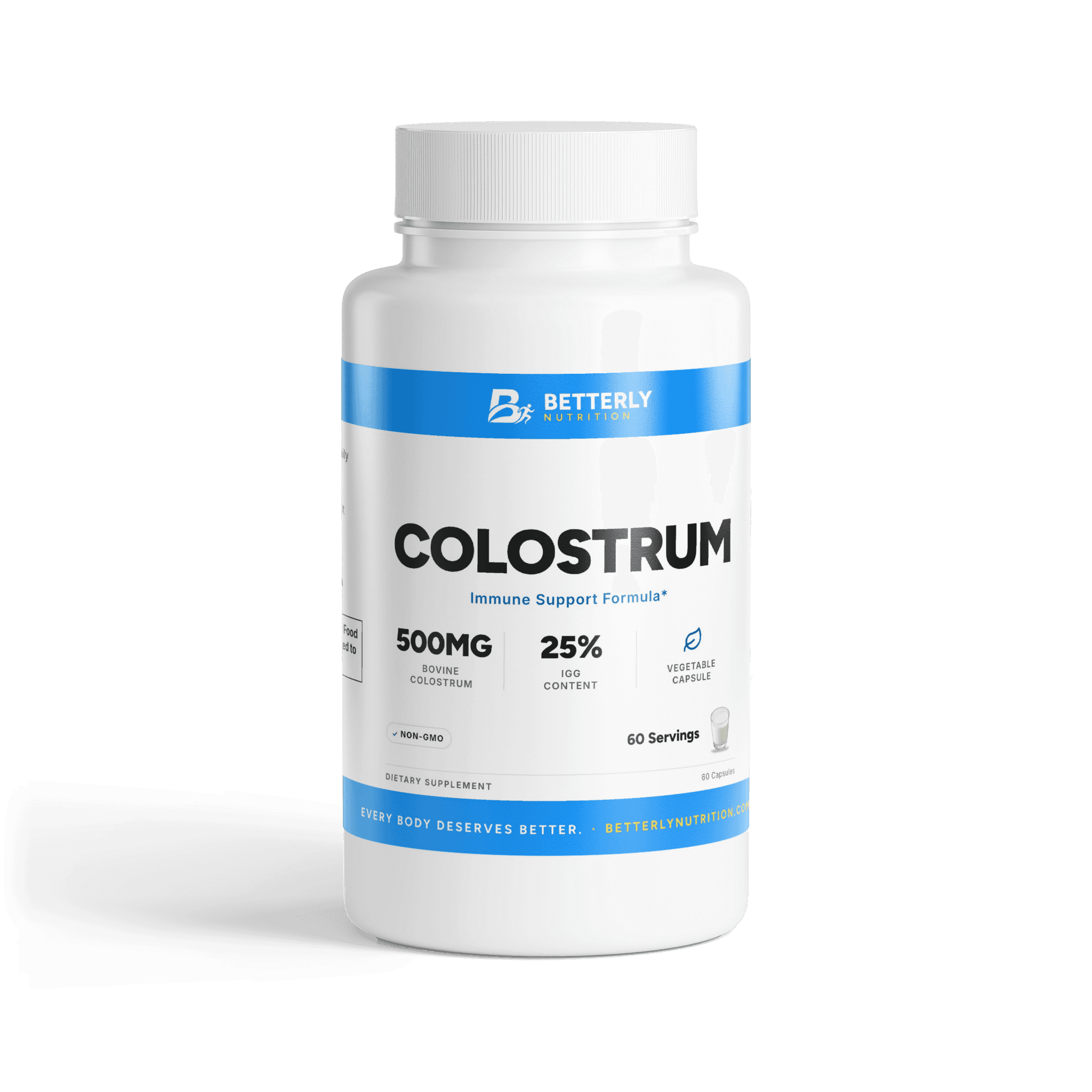
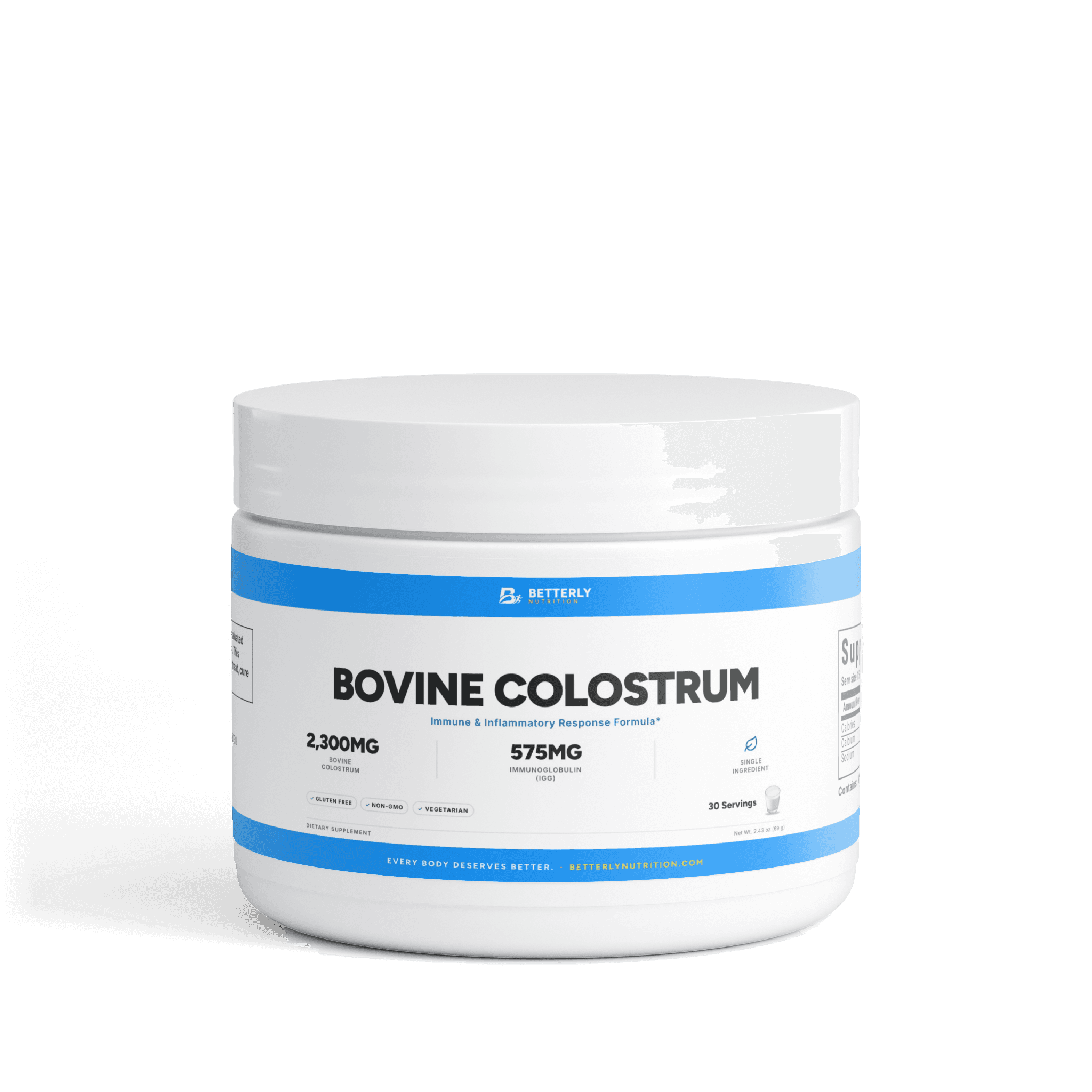
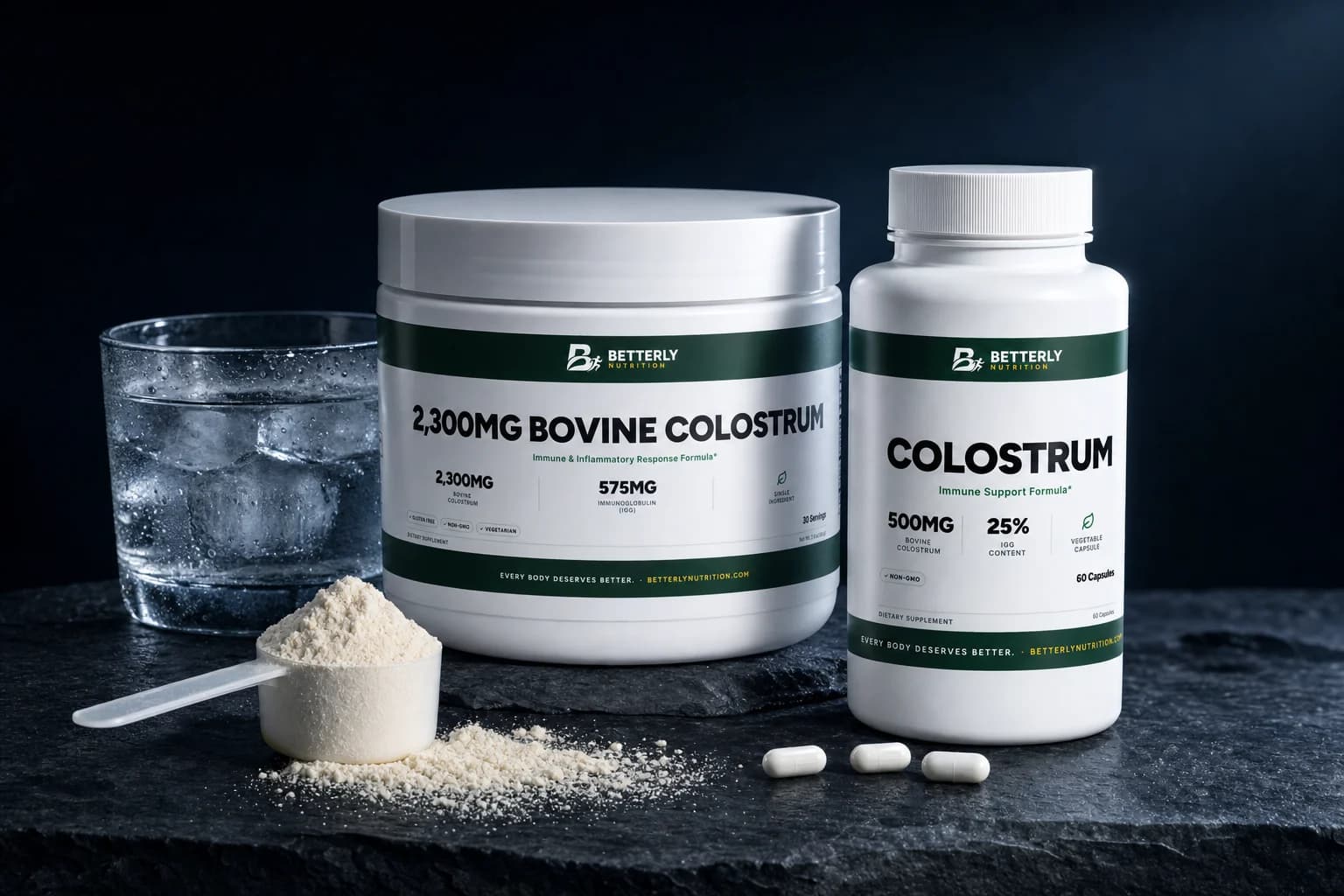
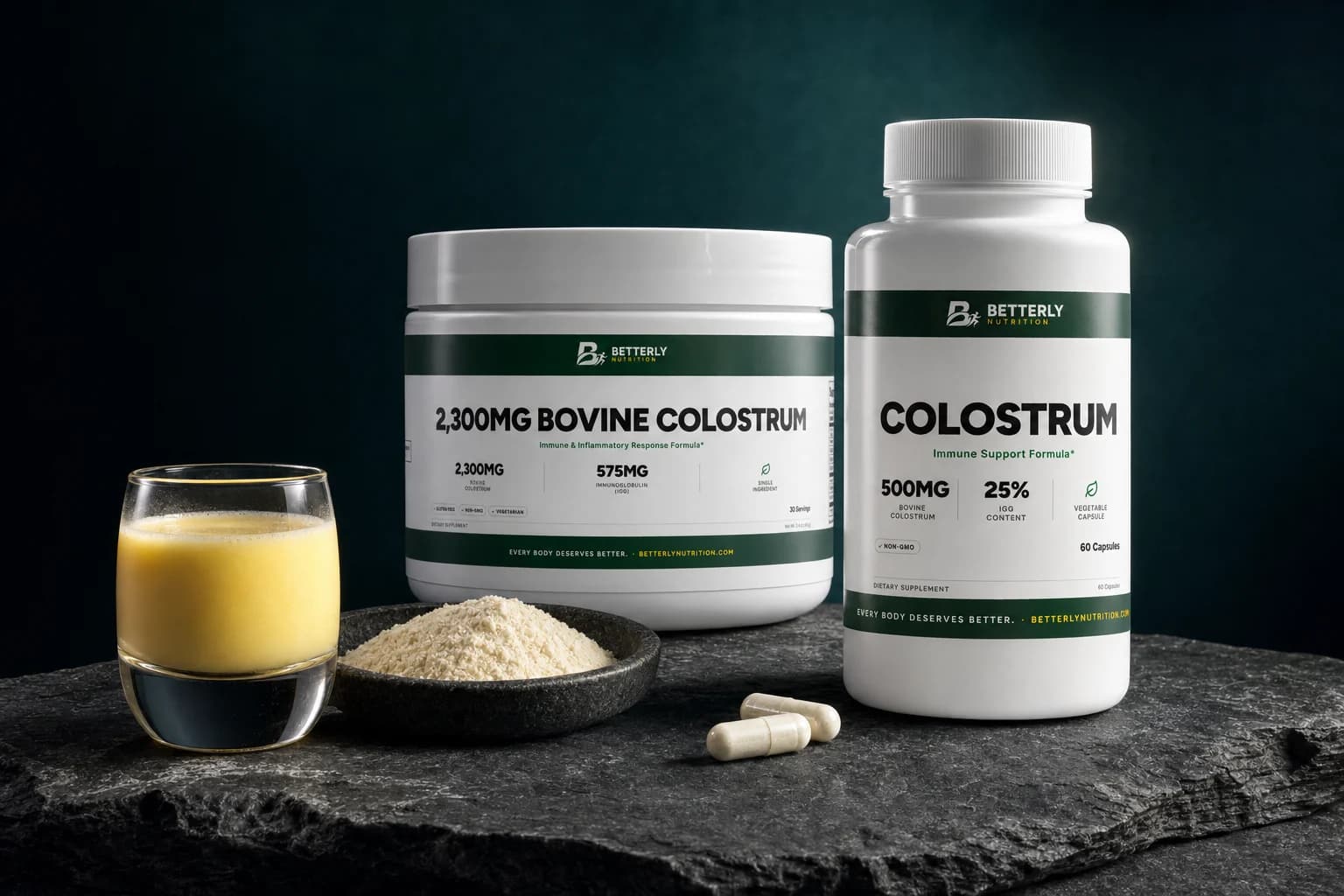
Bovine colostrum is the milk a cow makes for a newborn calf in its first days, before ordinary milk takes over. For supplements, it's dried into a powder. That powder fills our Colostrum Capsules at 500 mg per capsule, and it's the only ingredient in our 2,300mg Bovine Colostrum Powder.
The clearest safety summary we found is in a 2021 systematic review in the journal Nutrients, Bovine Colostrum Applications in Sick and Healthy People. It recaps an earlier review of 51 studies covering 2,326 people. That earlier work found no serious adverse events. The mild to moderate ones were an unpleasant taste, nausea, flatulence, diarrhea, skin rash and stomach discomfort of an unspecified kind. Nine of the studies reported no side effects at all.
Keep two limits in mind. Those studies used many different colostrum products and amounts, none of them ours. And the summary gives no frequency for any single effect, so we can't tell you which one is most common.
Are colostrum powder side effects different from capsules?
No source we found compares colostrum powder and capsule side effects; what changes between Betterly's two is the colostrum per serving, the taste and what you mix it into.
Our colostrum powder vs capsules guide covers the full labels, including the capsule's added ingredients and the gluten-free claim only the powder makes. For tolerance, three differences matter:
- Colostrum per serving. A 2.3 g scoop of the powder carries 2,300 mg of bovine colostrum; a capsule carries 500 mg. If new foods tend to unsettle your stomach, 500 mg is a smaller first test.
- Taste. An unpleasant taste is one of the six reported effects, and you'd only meet it with the powder. The tub adds nothing to cover colostrum's own flavor, while a capsule goes down whole.
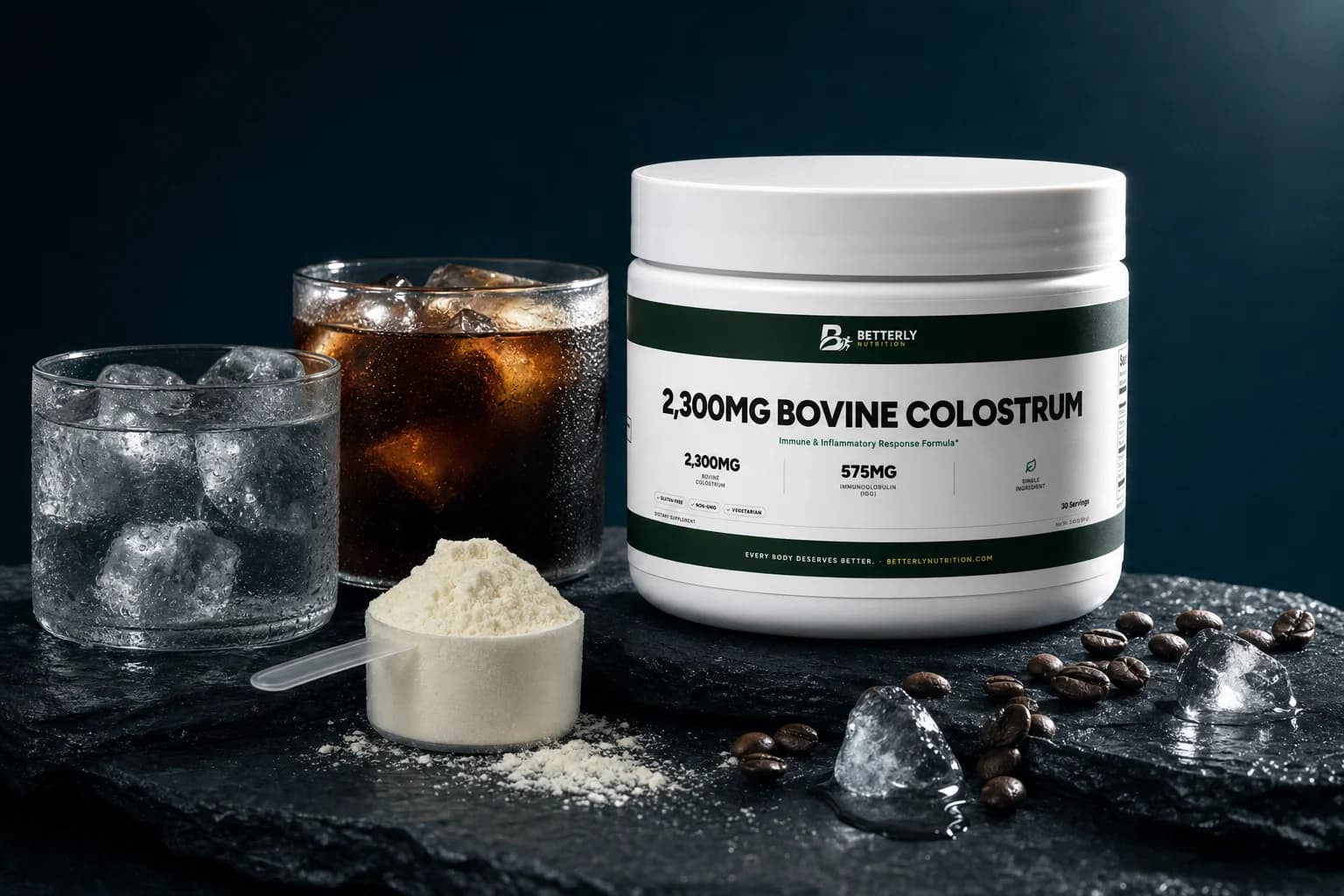
- The drink. The powder label allows 6-8 oz of cold water or a "favorite beverage." Stir a scoop into cow's milk and the glass gains the milk's own lactose, which the lactose table below puts in numbers.
Is colostrum dairy, and does it contain lactose?
Yes, bovine colostrum is dairy and it contains lactose, the natural sugar in milk, though colostrum carries less lactose than the regular milk a cow makes later.
Both labels settle the dairy part with one line: "Contains: Milk (Colostrum)." Two other words on the labels are easy to misread. The powder tub's "vegetarian" claim sits comfortably beside milk, because many vegetarian diets include dairy. The bottle's "vegetable capsule" names the material of the shell. Neither label claims vegan or dairy free.
The Nutrients review says colostrum contains less lactose than regular milk. It also describes a dried colostrum, used in one study it summarizes, that was 29.3% lactose by weight. So a colostrum powder can still carry a real share of milk sugar.
Our panels have no line for lactose or for sugars, and neither label says lactose free.
Can you be allergic to colostrum?
Yes, you can react to bovine colostrum if you're allergic to cow's milk, and both Betterly colostrum labels declare milk. With a milk allergy, skip colostrum entirely.
MedlinePlus's encyclopedia entry on food allergy describes it as an immune response set off by a food such as milk. It lists milk among the most common food allergies in people of all ages. Symptoms it names include hives, a hoarse voice and wheezing. Severe reactions can start right away or within two hours of eating, and they can be life threatening.
MedlinePlus says to call 911 or your local emergency number for any serious or whole-body reaction after eating a food, particularly wheezing or trouble breathing. The same page adds that anyone who has had an allergic reaction to a food should see an allergist. If a milder rash or itching follows a dose, our own suggestion is to stop taking colostrum and call your provider.
An allergy isn't the same as lactose intolerance, even though both can follow a glass of milk. MedlinePlus calls a true food allergy much less common, and it lists cow's milk and dairy, usually because of lactose intolerance, among common food intolerances.
Can you take colostrum if you're lactose intolerant?
Some people who are lactose intolerant may handle bovine colostrum, since servings are small, but it isn't lactose free and neither Betterly label prints a lactose amount.
NIDDK, part of the National Institutes of Health, gives useful scale on its page about eating and diet with lactose intolerance. It says people with lactose intolerance can handle different amounts of lactose. It adds that many could have 12 grams, about the amount in 1 cup of milk, with no symptoms or only mild ones.
Here's how our servings compare with that 12 g figure. Each weight below is total colostrum, so the lactose inside it must be smaller still.
| Serving, per the label | Colostrum in it | Most lactose it could hold |
|---|---|---|
| 1 Colostrum Capsule | 500 mg | Under 0.5 g |
| 3 capsules, the label's daily max | 1,500 mg | Under 1.5 g |
| 1 scoop of powder in water | 2,300 mg | Under 2.3 g |
| 1 scoop in 8 oz of cow's milk | 2,300 mg | Roughly 12 g from the milk, plus the scoop |
The ceiling stays low in every row until cow's milk goes into the glass. These are upper bounds, since neither label prints the real lactose figure, and none of them says anything about a milk allergy.
NIDDK also says to talk with your doctor before using dietary supplements. If your doctor is comfortable with it, a single capsule with a meal keeps the amount small, and a scoop mixed into water adds no lactose beyond its own.
From our shop: Colostrum Capsules — each capsule is a 500 mg serving of bovine colostrum, a swallow-and-done format for adults who are fine with dairy and would rather not taste it at all.
Is colostrum allowed for drug-tested athletes?
The U.S. Anti-Doping Agency (USADA) warns that bovine colostrum can contain detectable IGF-1, a substance on WADA's Prohibited List, and says using it is at the athlete's own risk.
That warning comes from USADA's page on natural products derived from plants and animals, which names colostrum among the animal-based ingredients athletes ask about. IGF-1, short for insulin-like growth factor 1, is a growth factor that colostrum can contain. WADA, the World Anti-Doping Agency, keeps the Prohibited List.
USADA explains that IGF-1 you swallow is expected to break down during digestion. It then passes on WADA's position: there's no guarantee that IGF-1 in an oral product won't cause a positive test, and products like colostrum could be risky for athletes. USADA adds that it often can't give a firm anti-doping status for natural products.
Its advice is that athletes can lower the risk by using only products certified by an independent third party as free of prohibited substances. Neither of our colostrum labels carries that kind of certification, and we can't clear any product for sport. If you compete under a drug-testing program, ask your anti-doping agency or governing body before taking colostrum from any brand, ours included.
How should you take colostrum, going by the label?
Take 1 Betterly Colostrum Capsule 1 to 3 times daily, preferably with meals, or stir one 2.3 g powder scoop into 6-8 oz of cold water or a favorite drink.
The powder label is written for adults. To start carefully inside those directions:
- Stick to one colostrum product. With a single product in play, any stomach upset has an obvious suspect, and you stay inside one label's directions.
- If dairy worries you, start with one capsule. At 500 mg, it's the smallest colostrum serving on either label. Take just that one, with a meal, for a while before trying a second.
- Mix each scoop fresh. One scoop is the whole serving, and the label says to drink it within 10 minutes of mixing.
- Pay attention after the first few servings. Stomach upset that doesn't settle, a rash or anything else that worries you is a reason to stop and call your provider.
If you're unsure which meal should carry the capsule, when to take colostrum sorts out timing for both labels.
When is bovine colostrum a poor fit for you?
Bovine colostrum is a poor fit if dairy already disagrees with you, if it would land in a milk-based shake, or if you're drug-tested and can't check the product.
Dairy already disagrees with you. If regular milk tends to leave you gassy or uncomfortable, colostrum asks your stomach to handle more of the same. Gas and stomach discomfort are both on its reported list.
It would land in a milk-based shake. Stir the powder into a shake made with milk and, as the table above shows, most of the glass's lactose comes from the milk. Cold water, which the label names first, keeps that total down.
You're drug-tested and can't check the product. USADA's warning covers colostrum from any brand. If your anti-doping agency can't give you a clear answer on a product, passing on it is the cautious choice.
On the other side, colostrum may suit an adult who drinks milk without trouble, isn't pregnant or nursing, doesn't compete under drug testing and has cleared it with a provider if they take medication.
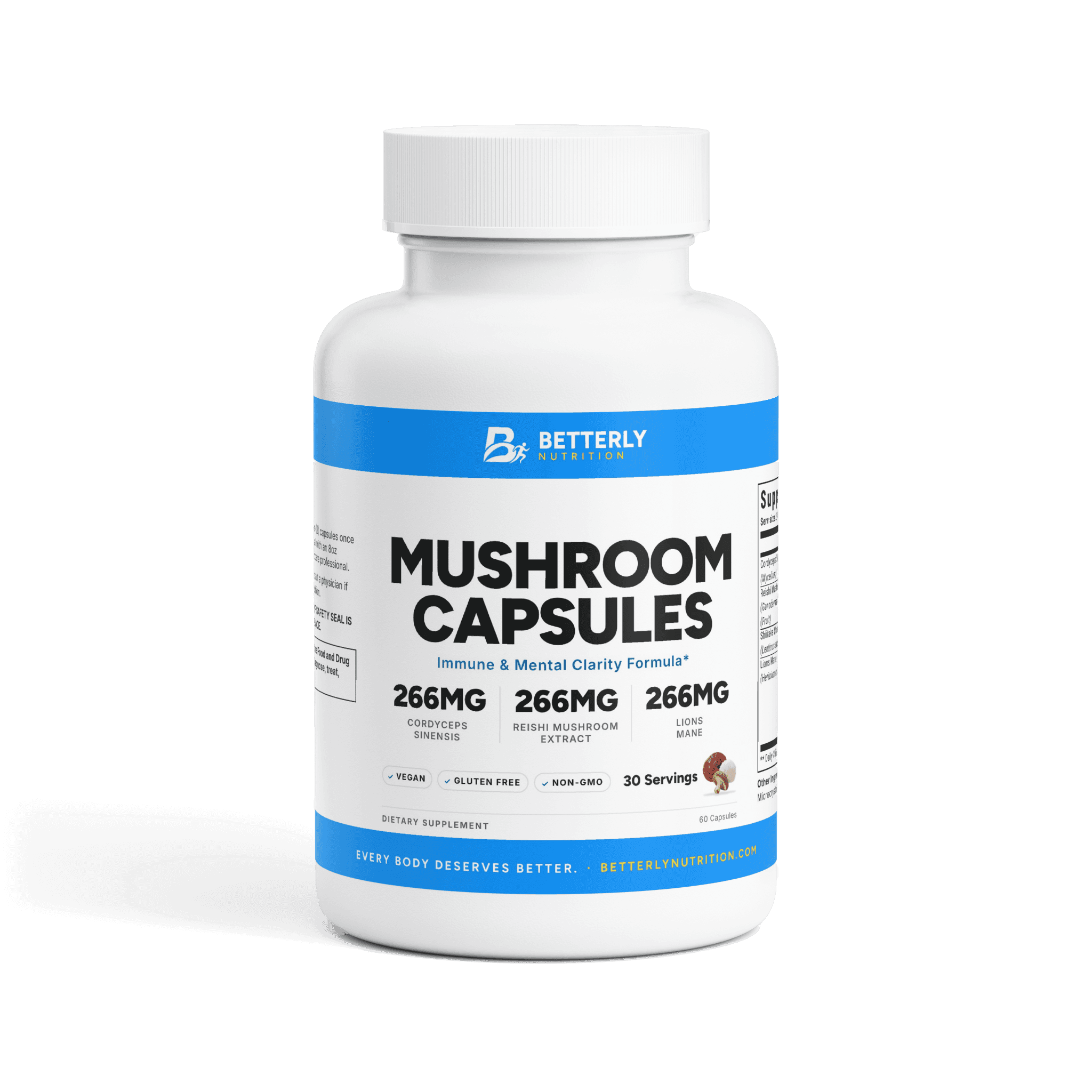
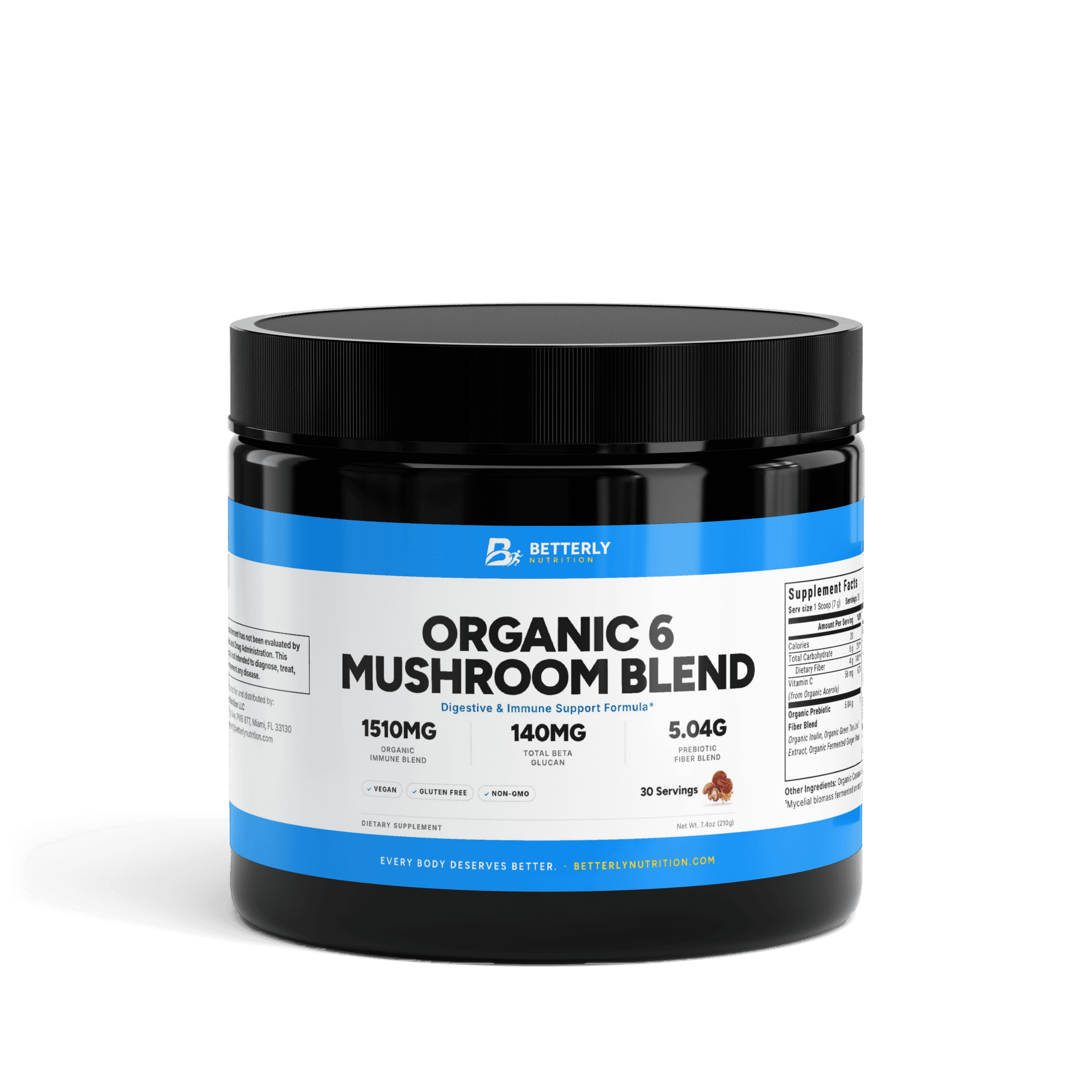
When milk is the sticking point, the Mushroom Capsules are the swap we'd look at. Their label claims vegan, gluten free and non-GMO, and they share our immune support collection with both colostrum products. We weigh that blend against a single mushroom in lion's mane vs a mushroom complex.
From our shop: 2,300mg Bovine Colostrum Powder — 30 servings of plain bovine colostrum at 2,300 mg per 2.3 g scoop, for adults who handle dairy well and would rather drink colostrum than swallow capsules.
Who should skip colostrum or check with a provider first?
Skip bovine colostrum with a milk allergy or vegan diet; ask a provider first if you're pregnant, nursing, under 18, on medication, facing surgery or managing a medical condition.
Both of our labels carry the same caution: "Do not exceed recommended dose. Consult a physician if pregnant, nursing, under 18, or have a medical condition."
| If this is you | What to do | Why |
|---|---|---|
| Allergic to cow's milk | Skip colostrum | Both labels declare milk |
| Vegan | Skip colostrum | It's a milk product |
| Lactose intolerant | Ask your doctor first | Not lactose free, no lactose figure printed |
| Pregnant or nursing | Ask your doctor first | Named in the label caution |
| Under 18 | Ask a doctor first | Named in the label caution |
| Taking any medication | Ask your doctor or pharmacist | They know your full list |
| Scheduled for surgery | Tell your surgical team | Every supplement belongs on that list |
| In a drug-tested sport | Ask your anti-doping agency | USADA's IGF-1 warning |
Only the first two rows are a flat no. The rest call for a conversation before the first capsule or scoop.
FAQ: bovine colostrum side effects and safety
Can colostrum cause diarrhea or gas?
Yes, diarrhea and gas are among the effects reported with bovine colostrum, though not everyone gets them. Both appear on the mild to moderate list in a 2021 review in the journal Nutrients. If you're sensitive to lactose, remember that colostrum isn't lactose free and that mixing the powder into cow's milk adds more. If the effects don't settle, stop taking it and call your provider.
How long do colostrum side effects last?
None of the sources we cite gives a timeline for how long colostrum side effects last, so we won't invent one. The 2021 Nutrients review lists which mild effects were reported, but it doesn't say how long they went on. Stop taking colostrum and call your provider if stomach upset or a rash hasn't cleared up. Trouble breathing or a whole-body reaction needs emergency help right away.
Do colostrum side effects differ for women and men?
We found no source that splits bovine colostrum side effects by sex, and our label caution applies to every adult the same way. The label does name pregnancy and nursing as reasons to consult a physician first. Beyond that, the questions are the same for everyone: milk allergy, lactose, medications and whether your sport tests for IGF-1.
Can you take colostrum while breastfeeding?
Check with your doctor before taking colostrum while breastfeeding. Both Betterly colostrum labels name nursing in their caution line, next to pregnancy and being under 18. Take the bottle or tub to the appointment, since it shows the milk declaration and the exact amount of colostrum in each serving.
Can colostrum interact with medications?
Colostrum interactions aren't covered by any source we cite, so we can't rule any in or out. Ask your doctor or pharmacist before you add it to a prescription routine. If lactose is your concern, NIDDK notes that small amounts of lactose may be found in some prescription and over-the-counter medicines, so your pharmacist can help you count every source.
Sources
- Bovine Colostrum Applications in Sick and Healthy People: A Systematic Review, Guberti M. et al., Nutrients, 2021
- Food allergy, MedlinePlus Medical Encyclopedia, U.S. National Library of Medicine
- Eating, Diet, & Nutrition for Lactose Intolerance, NIDDK, National Institutes of Health
- Natural Products Derived from Plants and Animals, U.S. Anti-Doping Agency
If this left you looking for somewhere to start, read bovine colostrum capsules, 500 mg each — its amounts per serving are listed on the page. For the practical questions this raises, how dosing, sourcing and subscriptions work is answered in one place.